
Attic Drywall Installation Services in Richmond, BC
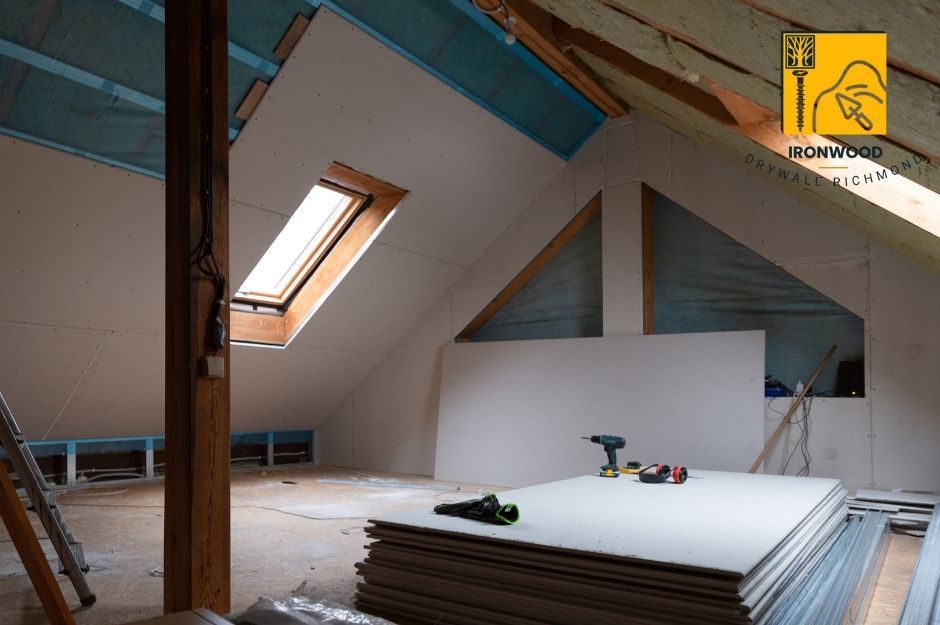
Transform your attic into a safe, functional, and beautifully finished space with professional drywall installation services from Ironwood Drywall Richmond. Our experienced contractors specialize in attic drywall hanging, taping, and finishing, using moisture-resistant and fire-rated materials designed for Richmond’s unique climate conditions.
From precise ceiling installations to seamless finishing on sloped surfaces, we handle every detail of your attic renovation with expert craftsmanship and code-compliant precision. Whether you’re converting your attic into a new living area or upgrading existing drywall, our team ensures long-lasting performance and a flawless appearance.
Call 778-400-1950 today to schedule your attic drywall installation in Richmond, BC — and trust Ironwood Drywall Richmond for reliable, professional results built to last.
Request A FREE Quote
Ironwood Drywall Richmond (HP)
Comprehensive Attic Drywall Installation Services in Richmond, BC
Professional attic drywall installation requires specialized techniques for proper preparation, ceiling mounting, and selecting appropriate materials that withstand temperature fluctuations and moisture conditions.
Drywall Hanging and Attic Preparation
Your attic space requires thorough preparation before drywall installation begins. Professional drywall installers assess structural integrity, electrical systems, and insulation placement to ensure optimal results.
Pre-Installation Requirements:
- Electrical rough-in completion
- Insulation installation and inspection
- Vapor barrier placement
- HVAC system integration
The drywall installation process starts with measuring and cutting panels to fit your attic's unique angles and dimensions. Installers secure drywall sheets to ceiling joists and wall studs using appropriate fasteners spaced according to building codes.
Attic spaces present challenges with sloped ceilings and limited access points. Professional drywall services use specialized equipment and techniques to maneuver materials safely through confined spaces.
Your attic's structural elements determine fastener placement and panel orientation. Installers identify load-bearing components and ensure proper attachment without compromising structural integrity.
Attic Ceiling Drywall Installation
Attic ceiling installation demands precise measurement and cutting techniques to accommodate irregular shapes and angles. Your ceiling panels require proper support during installation to prevent sagging or cracking.
Installation Specifications:
- 5/8" drywall for ceiling applications
- 16" or 24" joist spacing considerations
- Proper fastener depth and spacing
- Seamless panel alignment
Professional drywall installers use lift equipment to position ceiling panels accurately. This ensures consistent spacing and reduces installation time while maintaining quality standards.
Your attic ceiling joints receive specialized taping and mudding treatment. Multiple coats of joint compound create smooth transitions between panels and eliminate visible seams.
Temperature control during installation prevents material expansion and contraction issues. Installers monitor environmental conditions to ensure optimal curing and adhesion.
Moisture-Resistant and Fire-Rated Drywall Options
Your attic environment requires specific drywall types to address moisture concerns and fire safety requirements. Moisture-resistant drywall contains additives that prevent mold growth and water damage.
Specialized Drywall Types:
Type Application Benefits
Moisture-resistant High humidity areas Mold prevention, durability
Fire-rated Safety requirements 1-2 hour fire resistance
Standard General applications Cost-effective, versatile
Fire-rated drywall provides essential protection between living spaces and attic areas. This material meets building code requirements for fire separation and contains fire-retardant additives.
Your attic's ventilation system works with moisture-resistant drywall to control humidity levels. Proper material selection prevents long-term damage from condensation and temperature changes.
Professional drywall services evaluate your specific needs to recommend appropriate materials. Factors include local climate conditions, building codes, and intended attic usage.
Professional Drywall Finishing and Upgrades for Attics
Professional attic drywall finishing requires specialized taping and mudding techniques to create seamless surfaces. Proper insulation integration enhances energy efficiency while strategic surface preparation ensures durable, paint-ready walls and ceilings.
Drywall Taping and Mudding Techniques
Attic drywall joints require three-coat finishing systems for professional results. Your contractor applies paper tape or mesh tape with base coat compound, followed by two additional coats that feather beyond the previous layer.
Standard Finishing Levels:
- Level 3: Texture-ready finish with tool marks acceptable
- Level 4: Paint-ready finish with uniform texture
- Level 5: Premium smooth finish for high-end applications
Corner beads protect outside corners from damage while providing clean lines. Metal or plastic corner beads get embedded in joint compound and sanded smooth.
Interior corners use paper tape folded at 90 degrees. The compound fills gaps while the tape reinforces the joint against cracking from structural movement.
Screw heads receive three separate coats. The first coat fills the depression, while subsequent coats feather outward to eliminate visible dimples.
Insulation and Energy Efficiency Solutions
Moisture-resistant drywall prevents condensation problems in Richmond's humid climate. This specialized wallboard contains additives that resist moisture absorption and mold growth.
Fire-rated drywall provides enhanced safety in attic spaces. Type X drywall offers one-hour fire resistance, while Type C provides two-hour protection for commercial applications.
Energy Efficiency Features:
- Thermal bridging reduction at framing members
- Continuous air barrier integration
- Vapor barrier coordination with insulation
Your drywall installation coordinates with existing insulation systems. Proper fitting around electrical boxes and penetrations maintains thermal performance while meeting code requirements.
Drywall acts as an air barrier when joints receive proper sealing. This reduces energy loss through infiltration and improves overall building envelope performance.
Drywall Sanding and Surface Preparation
Progressive sanding with different grit levels creates smooth, paint-ready surfaces. Start with 100-grit paper for initial shaping, progress to 150-grit for smoothing, and finish with 220-grit for final preparation.
Dust control systems protect your belongings and improve air quality during sanding. Professional contractors use vacuum sanders and plastic barriers to contain debris.
Surface Preparation Steps:
- Sand all joint compound smooth
- Remove dust with tack cloth
- Apply appropriate primer
- Inspect for imperfections under proper lighting
Low-angle lighting reveals surface imperfections that normal overhead lighting conceals. Your contractor uses work lights positioned parallel to walls to identify areas needing additional attention.
Prime all surfaces before applying finish coats. Primer seals the porous drywall compound and creates uniform absorption for consistent paint appearance.
Attic Drywall Repair and Replacement Solutions
Attic drywall problems require specialized repair techniques to address moisture damage, structural settling, and aging materials. Professional replacement services ensure proper installation of fire-rated and moisture-resistant materials suited for attic environments.
Drywall Repair and Patching in Attics
Your attic drywall faces unique challenges from temperature fluctuations and potential moisture exposure. Common repair needs include nail pops, cracks from settling, and small holes from storage activities.
Surface preparation is critical before any patching work begins. The damaged area must be cleaned and properly prepared to ensure patch adhesion. Small holes up to 4 inches typically use mesh patches, while larger damage requires backing material.
Professional drywall patching involves several steps:
- Cut out damaged sections with clean edges
- Install backing material for structural support
- Apply joint compound in thin, even coats
- Sand between coats for smooth finish
Moisture-resistant drywall may be necessary in areas prone to condensation. This specialized material prevents future damage and maintains structural integrity in humid conditions.
Your contractor should match existing texture and paint to blend repairs seamlessly with surrounding surfaces.
Drywall Replacement and Upgrades
Complete drywall replacement becomes necessary when damage exceeds repair capabilities or when upgrading to modern building standards. Extensive water damage, multiple large holes, or outdated materials often require full replacement.
Fire-rated drywall installation provides enhanced safety protection. Type X drywall offers 60-minute fire resistance and is required by many building codes for attic applications.
The replacement process involves:
- Removal of damaged drywall sections
- Inspection of framing and insulation
- Installation of new drywall sheets
- Professional taping and mudding
- Final sanding and surface preparation
Drywall upgrades can improve your attic's functionality. Thicker panels provide better sound control and structural strength. Moisture-resistant options prevent future problems in humid environments.
Proper installation ensures joints are properly taped and finished. Multiple coats of joint compound create smooth transitions between panels.
Popcorn Ceiling Removal
Popcorn ceiling removal transforms outdated attic spaces into modern, clean environments. This textured finish, popular in past decades, now creates maintenance challenges and collects dust.
Professional removal requires careful preparation. Plastic sheeting protects surrounding areas from debris. The texture is typically scraped after light water application to reduce airborne particles.
Important safety considerations include asbestos testing for ceilings installed before 1980. Professional contractors handle hazardous materials according to safety regulations.
After removal, the ceiling surface requires:
- Thorough cleaning and inspection
- Repair of any gouges or imperfections
- Primer application
- Final paint or new texture application
The process reveals the original drywall surface underneath. Any damage discovered during removal receives proper repair before finishing work begins.
Modern smooth ceilings are easier to maintain and provide better light reflection in attic spaces.
Why Choose Ironwood Drywall Richmond for Attic Renovation Projects
Ironwood Drywall Richmond delivers specialized expertise in attic transformations with certified contractors and comprehensive service guarantees. Their customized approach ensures your attic renovation meets specific requirements for moisture resistance, fire safety, and professional finishing standards.
Expert Drywall Contractors in Richmond BC
Ironwood Drywall Richmond employs licensed and insured professionals who specialize in attic renovations throughout Richmond, British Columbia. Their contractors understand the unique challenges of attic spaces, including temperature fluctuations and moisture concerns.
The team maintains current certifications in fire-rated drywall installation and moisture-resistant applications. This expertise ensures your attic meets local building codes and safety requirements.
Key contractor qualifications include:
- Licensed drywall installation specialists
- Insurance coverage for all projects
- Experience with attic-specific challenges
- Knowledge of Richmond BC building codes
Their contractors handle complex attic geometries and sloped ceilings with precision. You receive professional workmanship that addresses structural limitations while maximizing your attic's potential.
Customized Attic Remodeling Services
Your attic renovation receives tailored solutions based on intended use and environmental conditions. Ironwood Drywall Richmond provides moisture-resistant drywall for humid conditions and fire-rated materials when required by code.
The company offers comprehensive attic services beyond basic drywall installation. Their scope includes surface preparation, insulation coordination, and finishing work.
Available customization options:
- Moisture-resistant drywall applications
- Fire-rated drywall systems
- Specialized ceiling treatments
- Integration with existing insulation
They coordinate with other trades during attic renovations to ensure seamless project completion. Your specific requirements drive material selection and installation methods for optimal results.
Professional Drywall Installers and Service Guarantees
Ironwood Drywall Richmond backs their attic installations with comprehensive service guarantees and quality assurance. Their professional drywall services include warranty coverage on both materials and workmanship.
The installation process follows systematic quality control measures. Each phase receives inspection before proceeding to ensure proper adhesion and finishing standards.
Contact 778-400-1950 to discuss your attic renovation requirements. Their team provides detailed project assessments and transparent pricing for all drywall installation services.
Service guarantees cover taping, mudding, and finishing work. You receive ongoing support for any issues that arise during the warranty period, ensuring long-term satisfaction with your attic transformation.
Should my attic walls be insulated?
Attics are notoriously drafty, cold, and sometimes damp. For these reasons, it is a good idea to insulate your attic if you intend to use the space. Insulating an attic reduces wasted energy, improves heat conservation, and can help keep mold and mildew at bay.
Do you insulate an attic after drywall?
Ideally, you should insulate your attic during the drywall installation process- but there are plenty of options to add insulation afterward. It is possible to drill holes in drywall through which expandable foam insulation can be sprayed. Professional contractors can also install cellulose insulation inside finished walls if necessary.
